Executive Summary
Lebanon has entered a narrow but consequential window for de-escalation following the tenuous US-brokered extension of the Israel-Lebanon ceasefire and launch of direct talks in Washington. These developments represent a meaningful diplomatic opening at a time of active conflict, offering an opportunity to shift from unmanaged escalation toward a more structured, state-centered process. But the moment is fragile, and persistent Israeli strikes and widespread destruction in southern Lebanon, adding to Hezbollah’s threatening posture, risk squandering an opportunity that can only be consolidated through sustained diplomacy and credible action.
This policy paper outlines what may be realistically achievable to secure meaningful gains, identifying the core constraints shaping the process, and charting a sequenced pathway for the United States, Lebanon, Israel, and international partners to translate this opening into meaningful progress toward stability, sovereignty, conflict resolution and, eventually, peace.
Strategic Context
Both Lebanon and Israel ultimately seek stability and security along their shared border, but the path there remains fraught with structural, political, and security obstacles. The effort to extend the ceasefire, secured through high-level US engagement and reinforced by ongoing diplomatic efforts in Washington, has been shaky at best. This was part of a deliberate US attempt to stabilize the Lebanon front, while managing broader regional tensions, and laying the groundwork for a potential peaceful resolution.
At the same time, the situation on the ground continues to be unstable and volatile. Israeli military operations have persisted, Hezbollah has signaled its continued resistance and escalated its rhetoric and activity, and the humanitarian toll, marked by widespread destruction and displacement, remains severe. This dual dynamic of diplomacy unfolding alongside active conflict defines the current moment, underscoring the importance of consolidating the ceasefire to prevent further deterioration and create space for a constructive political process.
Lebanon’s economic trajectory further complicates this picture. International Monetary Fund discussions on potential fast-track financial assistance reflect both the urgency of the crisis and the limits of available tools. While such support may provide short-term stabilization, it will be conditioned on certain economic and governance reforms, especially the banking sector. The banking collapse has pushed the economy into cash, eroded transparency, and enabled illicit financial activity to proliferate. Significant economic and governance reforms will be needed to meet international financial expectations and standards in order for a significant reconstruction effort to commence.
What Is Realistically Achievable?
For negotiations to succeed, a phased and structured process, as part of a comprehensive strategy, will be required. While peaceful relations remain the ultimate objective, progress will depend on achieving intermediate, credible deliverables that sustain the ceasefire and build momentum.
This will necessarily take the form of intermediate steps that ensure the ceasefire is durable and enforced: phased approaches to disarmament that are paired with reciprocal Israeli de-escalatory measures, the return of displaced populations to secured areas that are supported by the Lebanese Armed Forces (LAF) with international monitoring and de-confliction, and movement toward a security arrangement and eventual end-of-conflict framework that can support future dialogue around peace. Such progress will depend on short-term confidence-building measures by both parties that build trust and sustain a viable negotiation process, especially considering Israel’s low tolerance for a drawn-out disarmament process.
The road to peaceful relations will depend on the ceasefire holding. The current talks will thus be critical in shifting the trajectory from escalation to managed negotiation. If sustained, they can gradually establish the foundations for confidence-building measures, de-confliction, intelligence sharing, localized stabilization, and structured engagement on security arrangements. However, all this will require discipline from all parties and prolonged US engagement.
Core Constraints
Hezbollah’s role as central militia actor acting outside the authority of the Lebanese state presents the biggest challenge for the Lebanese government and is a major detriment to any diplomatic success. Its likely resistance to any process that threatens its position limits what the Lebanese government can credibly commit to and implement. Any strategy that fails to account for Hezbollah’s capacity to disrupt or escalate risks collapse at an early stage.
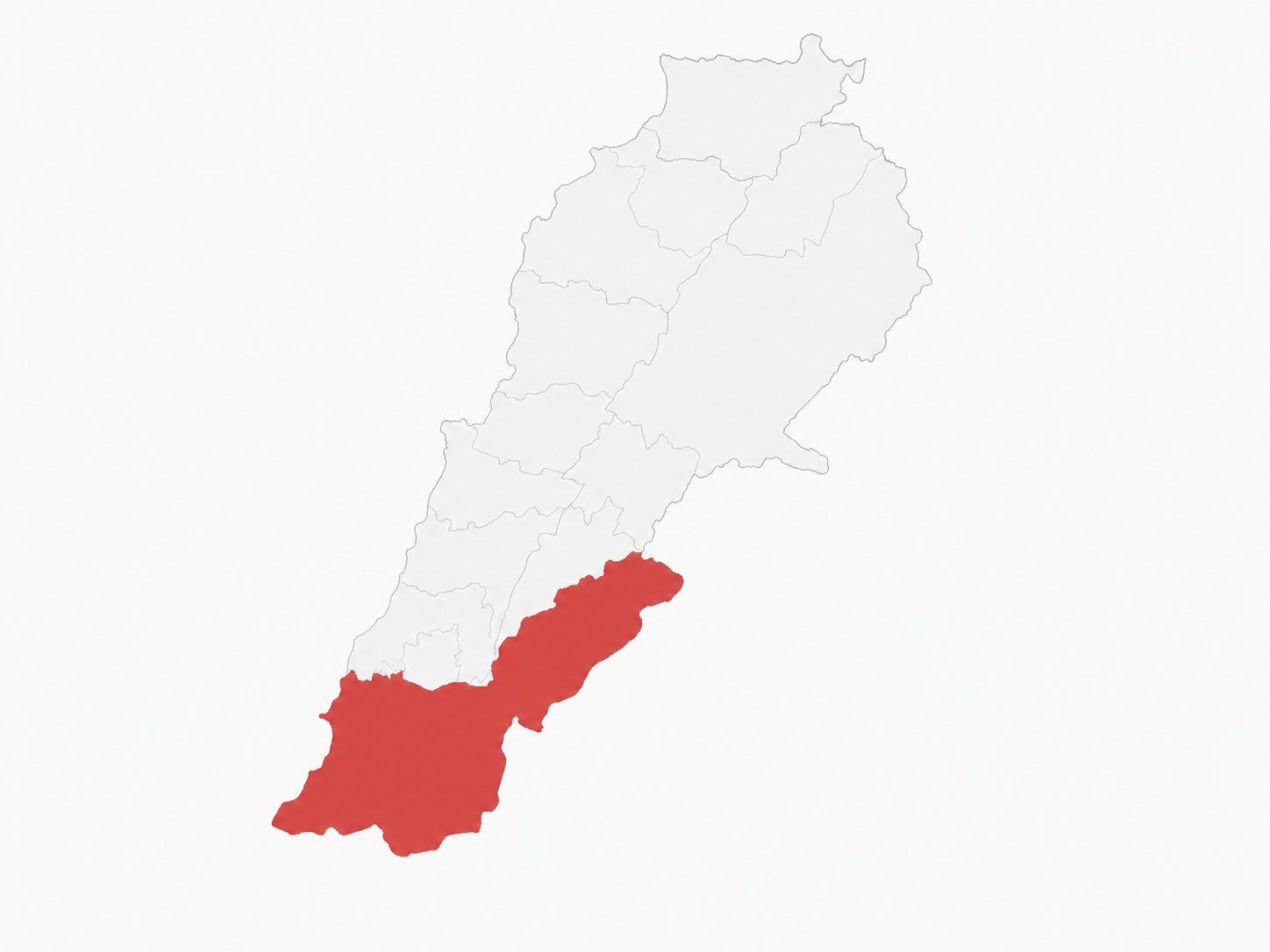
The fragility of the ceasefire introduces an additional, core challenge. Continued Israeli strikes, void of a durable ceasefire, risk undermining political space for negotiations and weakening Lebanese state legitimacy. At the same time, Israel’s military posture reflects a strategic approach that treats Hezbollah as separate from broader diplomacy, complicating efforts to align military behavior with political objectives. This dynamic is raising questions about Israel’s long-term intentions, including the prospect of its withdrawal from Lebanese territory.
The Lebanese state also faces structural limitations in asserting authority across its territory. The Lebanese Armed Forces are still the most credible national institution, but their capacity is constrained by limited resources, insufficient advanced capabilities, and questions around readiness for a mission as complex as disarming Hezbollah.
Finally, the relationship between the Lebanon-Israel track and broader regional diplomacy introduces both opportunity and risk. While the Lebanon-Israeli track must stand on its own merits, the role of an Iranian proxy like Hezbollah links it in practice to wider regional dynamics, particularly those involving Iran.
Sequencing and the Path Forward
Sequencing is very likely to influence the success or failure of these talks. A model that prioritizes full disarmament before any stabilization or recovery is likely impracticable. Progress will, instead, require a coordinated approach in which security measures, economic support, and political engagement advance in parallel. Sequencing must necessarily include reciprocal Israeli actions, such as phased withdrawal, de-confliction, and the release of prisoners in addition to recovery aid, US military coordination, and intelligence sharing.
This is particularly important in the context of Lebanon’s Shi’a communities, where the erosion of Hezbollah’s social role is sure to create a vacuum that, without early recovery and economic support, Hezbollah will exploit. Timely assistance can help shift incentives and reinforce state legitimacy.
Equally important are visible, incremental confidence-building measures by the Lebanese government. These could include advancing security initiatives, such as the Beirut security plan; arresting or deporting IRGC officers; enforcing laws governing the possession and mobilization of arms; taking targeted action against violators; downgrading diplomatic relations with Iran; and repealing laws that prohibit civil interaction with Israeli citizens. The absence of such measures has contributed to a growing credibility gap. Synchronized actions that demonstrate progress, even at a limited scale, while the larger issues in the negotiations are under consideration could reverse this.
Framing the End-State: Beyond the Ceasefire
The lack of a clear diplomatic strategy leading towards a political end-state is a critical gap in the current process. Prematurely invoking normalization, for example, or making other grand, symbolic gestures could backfire and undermine the negotiations given domestic political sensitivities.
Instead, an intermediate framework signaling a credible trajectory toward conflict resolution and, thereafter, peaceful relations between the two countries is needed at a moment when a full peace agreement remains politically challenging.
Historical precedent suggests a possible model: the 1994 Washington Declaration between Israel and Jordan, which formally signaled the end of a state of war and the beginning of a structured peace process, while allowing time for a more comprehensive agreement to be negotiated. A similar approach in the Lebanese context could take the form of agreement on a declaration of principles, security pact, or an end-of-conflict framework that suggests both irreversible movement away from active hostilities and a vision for peace. Interim frameworks in Egypt and Jordan established a common direction and commitment before formal peace agreements were concluded.
Such a framework would provide political space for Lebanese leadership, reassure Israel, and sustain US engagement by demonstrating that diplomacy is producing tangible progress and that the intent on all sides is peaceful relations and long-term stability. Carefully framed, this could bridge the gap between short-term ceasefire arrangements and a longer-term political settlement.
Lebanese, Regional, and International Dynamics
Lebanon’s internal political landscape remains complex but not entirely obstructive. President Joseph Aoun and Prime Minister Nawaf Salam seem to understand the stakes and support negotiations, but their ability to act remains constrained. Speaker Nabih Berri currently remains opposed to normalization and in favor of an approach which narrowly focuses on a ceasefire, Israeli withdrawal, prisoner releases and reconstruction.
Saudi Arabia and other Gulf actors are playing a stabilizing but cautious role. Their engagement has focused on maintaining cohesion among Lebanon’s leadership and preventing fragmentation, while also discouraging what they view as premature moves toward normalization. Their approach has emphasized sequencing, conditionality, and the need to avoid premature political moves that could derail negotiations. Their support is essential, especially in the context of reconstruction aid, and will likely remain contingent on credible Lebanese progress.
The United States continues to be the central external actor able to sustain momentum. Its role in aligning stakeholders, maintaining pressure, restraining escalation and anchoring the process will be decisive. But US attention is not guaranteed. Without visible Lebanese and Israeli action, momentum risks dissipating, increasing the likelihood of renewed escalation.
Recommendations
To the United States Government
- Facilitate a balanced negotiation framework to ensure that all agreements reached are enforced. The negotiations should have both a mil-to-mil and diplomatic channel.
- Anchor the ceasefire as the starting point of a structured diplomatic process. This entails an immediate halt to the destruction of villages in southern Lebanon and a sequenced set of interim steps leading to a declaration of principles, an end-of-conflict framework, and dialogue on peaceful relations.
- Establish credible monitoring and enforcement mechanisms. Expand coordination between US Central Command and the Lebanese Armed Forces, and use diplomatic leverage to align Israeli military behavior with broader political objectives.
- Consider establishing a US-led international group or military force to support, implement, and enforce agreed actions by the parties.
- Lead the preparation of coordinated international aid packages via donor conferences to support reconstruction, the LAF, and humanitarian aid, as tied to measurable progress.
To the Lebanese Government
- Articulate a clear, phased roadmap for restoring state authority. Expand LAF deployment where feasible and implement symbolic but meaningful short-term confidence-building measured (as described in this document) that demonstrate intent through visible action. This should be accompanied by unified political messaging, a clearly defined end-state, and precise articulation of the support articulated by international partners.
- Develop, in close coordination with the US and allied friends of Lebanon, a credible security plan that includes soldier livelihood aid and relies on sustained US support that enables the LAF to meet its expanded responsibilities. This should include provisions for force expansion where needed, deployment in stabilized communities, and close integration with returning populations to ensure security, maintain order, and support reconstruction and civil engineering efforts.
- Shape a declaration of principles or end-of-conflict strategy and framework that Lebanon can own politically, while providing the structure, direction, and credibility needed to keep Israel engaged and international support aligned.
To the Israeli Government
- Match diplomatic engagement with restraint on the ground, translating into an immediate halt to the widespread destruction in southern Lebanon. Reducing military operations will be essential to preserving the viability of negotiations as a durable ceasefire is a necessary initial step.
- Engage beyond immediate tactical concerns. Advance discussions on phased withdrawal, border demarcation, and de-confliction arrangements, alongside other steps that enhance Lebanon’s ability to take reciprocal actions and build confidence.
- Support, in parallel, the recovery efforts and return of displaced populations, sector by sector, with the LAF deploying in communities as Israel withdraws.
- Recognize that calibrated confidence-building measures by Israel are necessary to sustain momentum and lay the groundwork for an eventual end-of-conflict framework and pathway for peace.
To International and Gulf Partners
- Reinforce a coordinated, state-centered approach. Translate political support for Lebanese sovereignty, as expressed in the recent visit of Saudi officials to Lebanon, into aligned action with Washington, ensuring sustained coordination on the diplomatic track.
- Align support with measurable progress. Structure financial and political assistance around clear benchmarks and prepare recovery and reconstruction support that strengthens Lebanese state institutions rather than bypasses them.
- Sequence assistance alongside developments on the ground. Tie support to tangible progress on governance, security, and restoration of state authority, ensuring that engagement reinforces political and institutional gains.
- Strengthen the Lebanese Armed Forces. Provide targeted support to enhance LAF capabilities, including capacity-building and support to personnel and their families, to enable the state to assume a greater role in stabilization.
Across all Actors
- Treat IMF engagement as a stabilization tool, not a solution. Its effectiveness will depend on credible Lebanese reforms, especially in the financial sector, and alignment with a broader recovery and reconstruction framework. Strengthening financial governance, including efforts to address illicit financial activity, should be a core part of this agenda, with support from the US Treasury.
Conclusion
The extension of the ceasefire and the continuation of direct talks represent a rare diplomatic opening, but they are not a turning point yet. Progress will depend on whether the ceasefire holds, diplomacy is sustained, and both parties advance a sequenced approach built on deliverables, reciprocal actions, and confidence-building measures.
Importantly, without US leadership and support of a holistic strategy, the conditions for a peaceful settlement are unlikely to materialize.
Absent these elements, the current opening risks collapsing under the weight of continued escalation and structural constraints. If managed with discipline and supported by coordinated international engagement, it can begin to shift Lebanon toward stabilization, recovery, and a more durable political framework.